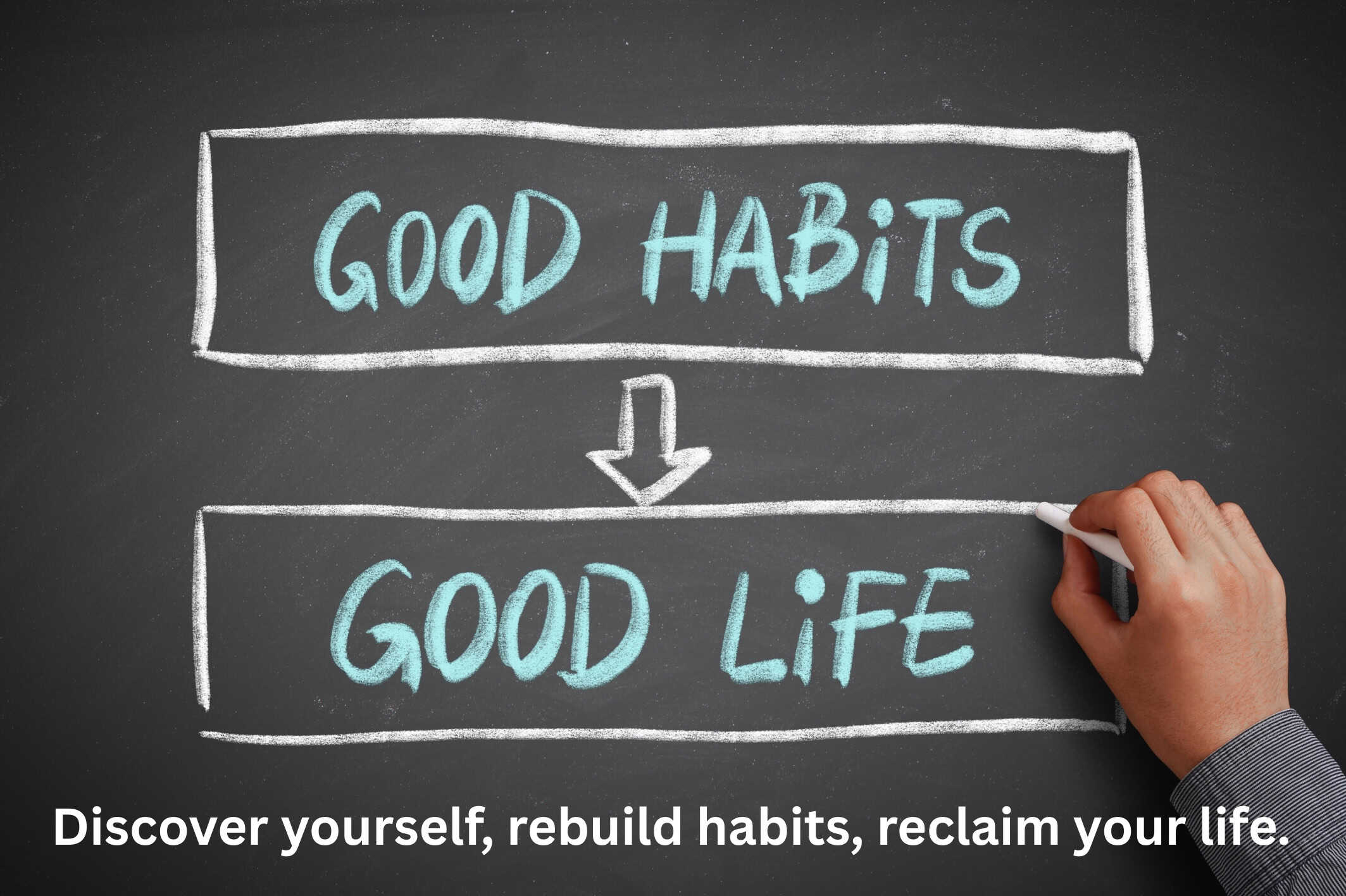

When most people set goals, they focus on outcomes: “I want to lose weight,” “I want to save more money,” or “I want to be more patient.” But James Clear, author of Atomic Habits, teaches that true and lasting change comes not just from what you want to achieve but from who you want to become. Identity-based habit formation and mental health are deeply interconnected, influencing each other significantly.
This shift—from focusing on outcomes to focusing on identity—is powerful. It not only improves motivation but also strengthens mental health and builds lasting confidence.
Step 1: Define Who You Are (Identity First)

Instead of starting with what you want to do, start with who you want to be.
- Example: Instead of saying, “I want to run a marathon,” say, “I am a runner.”
- Example: Instead of, “I want to spend less,” say, “I am someone who makes thoughtful financial choices.”
When your habits align with your identity, your actions reinforce who you believe you are. Every small action is like casting a vote for the person you want to become.
Why this helps mental health:
When we define ourselves by our values and identities—not just by outcomes—we buffer against shame and self-criticism. Missing a workout doesn’t mean, “I failed at my goal,” it means, “I’m still a healthy person who will get back on track tomorrow.” That flexibility protects self-worth and lowers anxiety.
Step 2: Clarify Your Goals

Your identity shapes the path, but goals give you direction. Write them down in clear, measurable terms:
- Health: “I want to be a strong, energetic person who exercises three times per week.”
- Relationships: “I want to be a present partner who listens without distraction.”
- Career: “I want to be a reliable professional who delivers projects on time.”
Think of goals as your compass, not your destination. They point you in the right direction but don’t tell you how to walk the path.
Why this helps confidence:
Clear goals reduce mental clutter. When you know what you’re working toward, you can measure progress more clearly. Each step you take builds self-trust: “I said I’d do this, and I did.” Over time, these small wins accumulate into genuine self-confidence.
Step 3: Build Systems, Not Just Goals

Goals are results. Systems are the daily habits that lead to those results. Clear reminds us: “You don’t rise to the level of your goals, you fall to the level of your systems.”
- If your goal is to get fit, your system could be laying out your workout clothes the night before and scheduling exercise into your calendar.
- If your goal is to save money, your system could be setting up an automatic transfer into your savings account each payday.
- If your goal is to be a more present parent, your system could be turning off your phone during dinner each night.
Systems create consistency, and consistency builds identity.
Mental health connection:
Systems reduce decision fatigue. When healthy behaviors are automatic, you spend less energy debating with yourself (“Should I work out?”). This frees up mental space and lowers stress. Systems also help prevent all-or-nothing thinking, which is often tied to anxiety and depression.
Step 4: Break Habits Into Small, Repeatable Actions

Clear’s “Two-Minute Rule” is a powerful way to start. Ask: What’s the smallest version of this habit I can do in two minutes?
- Want to read more? Start by reading one page a night.
- Want to meditate? Start with two minutes of breathing.
- Want to run? Put on your running shoes.
These small actions lower resistance and make it easier to stick with the habit. Over time, momentum grows naturally.
Mental health connection:
Small habits give you achievable wins. Even on tough days, you can succeed at something small, which protects against discouragement and strengthens resilience. Over time, these small successes shift your inner dialogue from “I can’t follow through” to “I can trust myself to keep showing up.”
Step 5: Use Environment and Cues to Your Advantage

Your environment shapes your behavior. Make good habits obvious and bad habits invisible.
- Place a book on your pillow as a reminder to read before bed.
- Keep healthy snacks visible and junk food out of reach.
- Put your running shoes by the door.
The easier you make the desired action, the more likely it becomes part of your daily routine.
Confidence boost:
When you set up your environment for success, you learn that you can influence your world instead of being at its mercy. That sense of agency—the belief that your actions matter—is one of the strongest predictors of psychological well-being.
Step 6: How Habits Strengthen Mental Health & Self-Confidence

Building habits through identity-based systems isn’t just about productivity—it directly supports mental health:
- Reduces Anxiety: Predictable routines reduce uncertainty, which is one of the biggest triggers for worry.
- Fights Negative Self-Talk: Each completed habit is evidence that you are capable, breaking the cycle of “I never follow through.”
- Supports Mood Regulation: Healthy systems like exercise, sleep, and social connection are proven to improve mood and reduce symptoms of depression.
- Builds Resilience: Small wins build a track record of success you can lean on during setbacks.
Self-confidence is not built in a single leap—it’s built brick by brick, habit by habit. Each time you align your actions with your values, you strengthen both your sense of self and your belief in your ability to grow.
Putting It All Together: A Real-Life Example
Let’s say you want to be healthier.
- Identity: “I am a healthy person who takes care of my body.”
- Goal: Exercise three times a week and eat balanced meals.
- System: Pack your lunch the night before, block workouts in your calendar, and leave a water bottle at your desk.
- Two-Minute Habits: Put on workout clothes after work, cut up fruit when unloading groceries.
- Environment: Keep gym shoes in the car, stock the fridge with ready-to-eat veggies.
Mental health benefit: Over time, these consistent habits reinforce a new self-image. You stop thinking, “I’ll never stick with it” and start saying, “I am someone who takes care of myself.” That shift improves mood, lowers shame, and strengthens self-confidence.
Final Thoughts
Change doesn’t come from one big transformation. It comes from tiny, consistent habits that align with the kind of person you want to be. Ask yourself daily: What small action can I take today that is a vote for my future self?
When you do, you’ll notice it’s not only your habits that change—it’s your confidence, your mental health, and your entire sense of who you are.
How We Can Support You
Sometimes it’s hard to know where to begin. You may feel uncertain about who you are, what you truly want, or how to take the first step toward change. At Reflective Soul Therapy & Wellness, our counsellors and wellness professionals are here to walk alongside you. Through counselling, coaching, and integrative wellness support, we can help you explore your values, clarify your identity, and design systems that support your goals. Together, we can create a plan that not only builds healthier habits but also strengthens your self-confidence and overall mental health. You don’t have to figure it out alone—our team is here to guide you on your journey of growth and self-discovery.
📞 Contact Us Today
Reflective Soul Therapy & Wellness
Phone: 250-300-6215
Email: Intake@ReflectiveSoulWellness.com
Website: https://reflectivesoulwellness.com/
Booking Site: https://reflectivesoulwellness.janeapp.com/